
Overview
Pushal and Dasteh give wholesale buyers additional choices when matching saffron to a market and a budget. Compare the offered presentation, the work needed before use or repacking, and the results from the actual lot. The right grade is the one that meets your customer specification at a workable total cost.
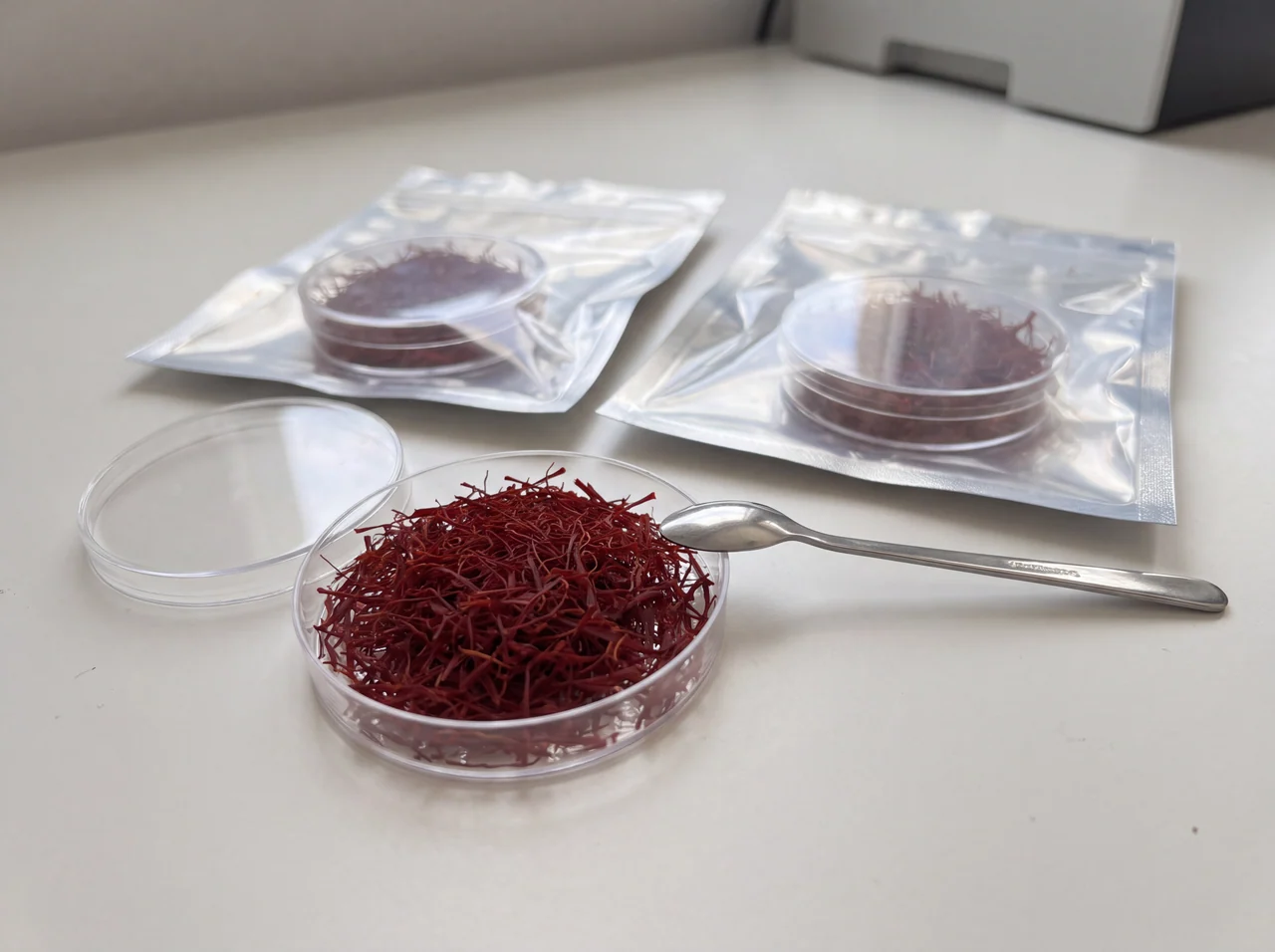
CleanSaffron lists Pushal as long filaments and Dasteh as dokhtar pich, a traditional presentation. Include both the grade and the exact catalogue description in your enquiry. Ask for samples that show how the product will be supplied rather than relying on the name alone.
Begin with the product your customer expects
Write down whether the saffron will be sold in a retail pack, supplied to restaurants or used as a manufacturing ingredient. A distributor serving several channels may need separate specifications instead of one grade for every customer.
For a retail line, assess how the sample looks at the intended fill weight and whether the customer recognises that presentation. For food service, ask whether users need whole threads, a prepared portion or material that their kitchen will process. For manufacturing, focus the comparison on the approved recipe and handling method.
Use a practical comparison sheet
| Item | What to record for each sample |
|---|---|
| Supplier description | Pushal, Dasteh/dokhtar pich, and any processing detail |
| Sample identity | Date received, sample reference and linked lot |
| Presentation | Thread appearance, visible variation and supplied arrangement |
| Preparation | Sorting, separating or grinding required by your process |
| Evaluation | Appearance, aroma and performance in the intended use |
| Purchase terms | Net weight, pack format, quantity, tests and delivery scope |
Keep photographs alongside the written assessment. A short product name cannot capture every physical feature, and a later purchasing team needs more than a memory of the first sample.
Compare usable yield rather than purchase weight alone
If your operation removes or separates any material before sale, measure that step during the trial. Record starting weight, usable output and labour time. Apply the same process to both samples before comparing their economics.
As an illustrative calculation, a 1,000 g trial that produces 920 g of your chosen finished presentation has a 92% process yield. Divide the ingredient cost by 0.92 to express it per kilogram of that output, then add processing and packaging costs. This example is not an expected yield for either grade; your actual process determines the number.
Do not classify all appearance differences as waste. Whether a component belongs in your finished product depends on the product description you intend to sell and the agreed specification. Resolve that definition with your quality and commercial teams before costing the order.
Connect the grade to quality checks
Use appearance to select a presentation, then use the laboratory brief to assess the required quality characteristics. ISO 3632-2:2010 covers test methods for saffron in filament, cut-filament and powder forms. A named trade grade does not remove the need to specify the tests relevant to your purchase. ISO's test-method scope.
Sampling also matters. Keep the report linked to the material that was actually submitted, and agree how it represents the shipment. Our sample evaluation guide explains a workable sequence from an initial comparison to final lot approval.
Plan repeat purchases before the first order
Ask which characteristics can be held consistent across future lots and which will need a fresh sample. Keep the accepted presentation, processing description, report requirements and pack format in one specification. Use a new revision when your market needs change.
For a distributor, it can help to approve a primary option and a separately evaluated alternative. That gives the sales team a clear explanation if availability changes, while keeping product substitutions subject to a recorded decision.
Put both options into a buying brief
CleanSaffron supplies whole-thread grades through its wholesale range. Send the grade names, quantity, destination and customer application, together with any sample or laboratory requirements. Comparing Pushal and Dasteh on those shared terms gives your team a useful commercial choice.