
Overview
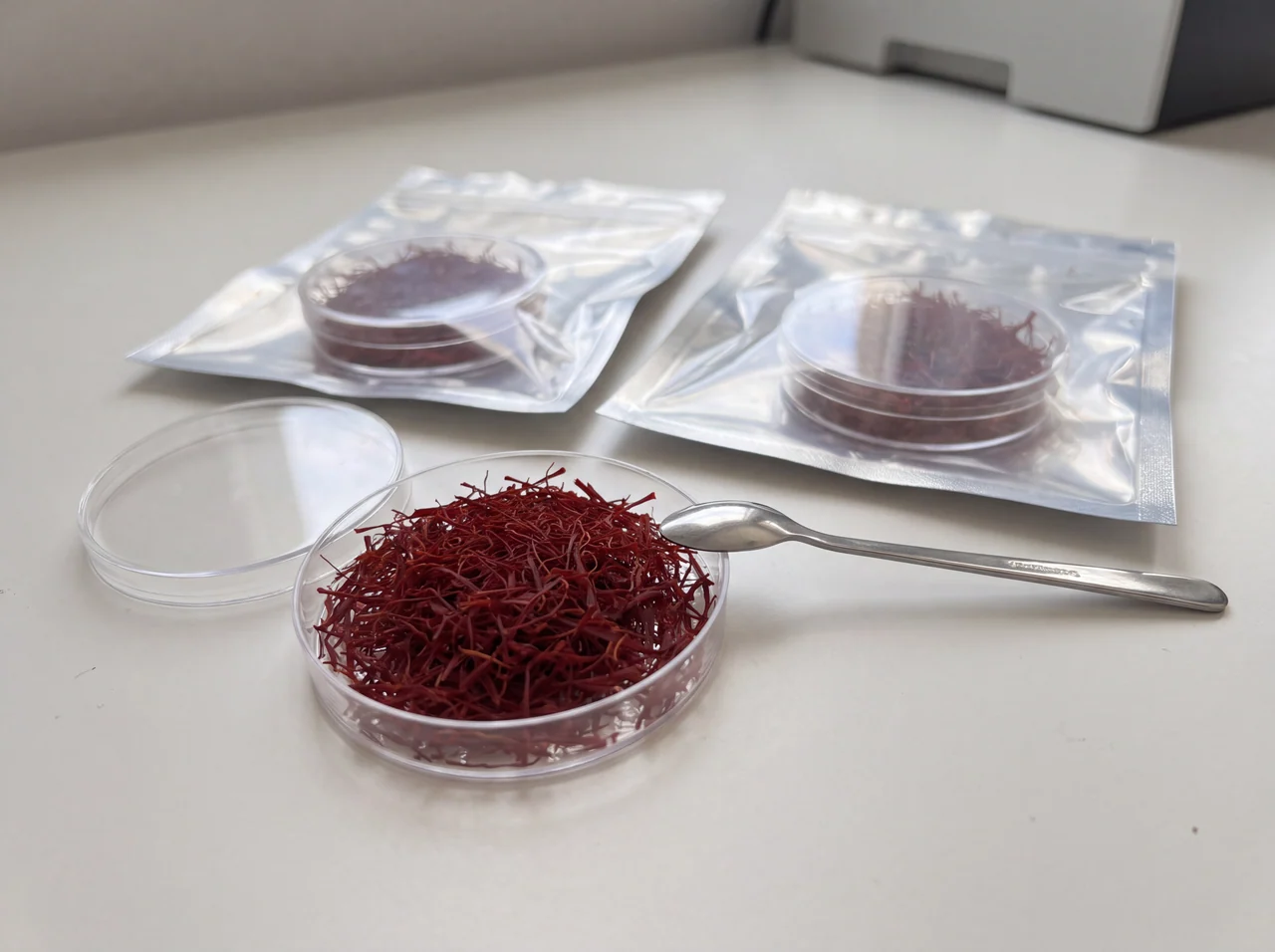
A wholesale saffron sample should answer a defined purchasing question and connect to the material you may buy. Decide whether you are comparing grades, testing a production recipe or approving a particular lot, then request the sample information and quantity needed for that task.
CBI's guidance for spice exporters recommends representative samples linked to the lot intended for supply. That relationship is more useful to a buyer than an attractive sample with no connection to the eventual shipment. CBI: providing representative product samples.
Distinguish an exploratory sample from an approval sample
An exploratory sample helps your team understand a grade or presentation. You may use it to choose between Super Negin and Negin or to see how whole threads look in a proposed retail jar. Record that purpose so it is not later mistaken for approval of an unidentified shipment.
A lot-approval sample supports a specific purchase. Ask which lot it represents, how it was taken and what quantity is available from that lot. Agree whether the material can be held while your evaluation is completed and what happens if availability changes.
Ask for the right amount and information
There is no single sample weight that suits every test and business. A visual comparison, a packaging trial and a laboratory programme can require different amounts. Ask the laboratory for its sample requirements, add the amount needed for your own trials and plan any retained portion before dispatch.
| Sample detail | Why it matters |
|---|---|
| Product and processing description | Establishes which option is being evaluated |
| Supplier and laboratory identifiers | Connects commercial and analytical records |
| Lot reference | Links the sample to potential stock |
| Sampling date and method | Documents how the material was selected |
| Pack and seal details | Helps identify the sample received |
| Intended evaluation | Prevents the sample being used for an unsupported approval |
Agree delivery arrangements and sample charges as part of the enquiry. Describe the sample accurately for transport and follow the destination's requirements; a small parcel is still a shipment.
Run a controlled comparison
Give samples neutral internal codes during the evaluation if brand or price expectations could influence the result. Use equal weights, consistent lighting and the same observation method. Photograph the material and keep the codes linked to the supplier records.
For a recipe trial, hold the other ingredients and preparation process constant. For a retail presentation trial, use the same container and fill weight. Record the result in terms your team can act on, such as the accepted appearance, handling behaviour or finished-food outcome.
Send laboratory work with a precise brief
Identify the requested parameters and the specification used for acceptance. Confirm how the sample should be packaged, labelled and submitted. If you need a particular accreditation scope, establish that with the laboratory before sending material. ISO's laboratory competence standard.
Keep the complete report with the sample record, and use the certificate-of-analysis checklist to review identifiers, methods and results. Ask for clarification when the supplier's lot code and the report's sample code are different.
Turn the result into a buying decision
Record approval, conditional approval or the specific issue that needs resolution. Identify who made the decision and which product specification it supports. If the sample is accepted only for a particular application, make that limitation visible to other teams.
Ask for written confirmation that the quotation and planned shipment refer to the approved lot or agreed approval process. Keep the sample, quotation and order linked in the purchasing file. A substitution should pass through the appropriate review instead of inheriting approval solely from the grade name.
Close the loop at receiving
Compare arriving lot identifiers, pack format and product presentation with the order record. Apply your agreed receiving and testing procedure before issuing stock. Keep any discrepancy identifiable by lot and quantity so it can be resolved efficiently.
CleanSaffron coordinates samples and laboratory testing for wholesale buyers. Send the grade options, intended application, quantity and destination, together with the decision your team needs the samples to support.