
Overview
The strongest approach to checking saffron authenticity combines a traceable supplier, an identifiable sample and laboratory work matched to the question you need answered. Appearance and an infusion trial are useful observations, but they should sit inside that wider buying process.
A wholesale order deserves a repeatable method. Record the sample reference, your observations, the analyses requested and the decision taken. That gives your receiving team a basis for checking the shipment and your purchasing team a reference for the next order.
What does the evidence say about adulteration?
In the European Commission's 2019–2021 coordinated control exercise, 11% of the sampled saffron was considered suspicious of adulteration. This describes that particular historical sampling exercise, not the percentage of all saffron sold today. The work examined issues including botanical substitution, fillers and unauthorised colour enhancement. European Commission: herbs and spices control results.
The commercial lesson is to ask a specific question about the material. “Is it genuine?” may require a different investigation from “Does this lot meet our colour specification?” Discuss both when they matter to your purchase.
What can a visual check tell you?
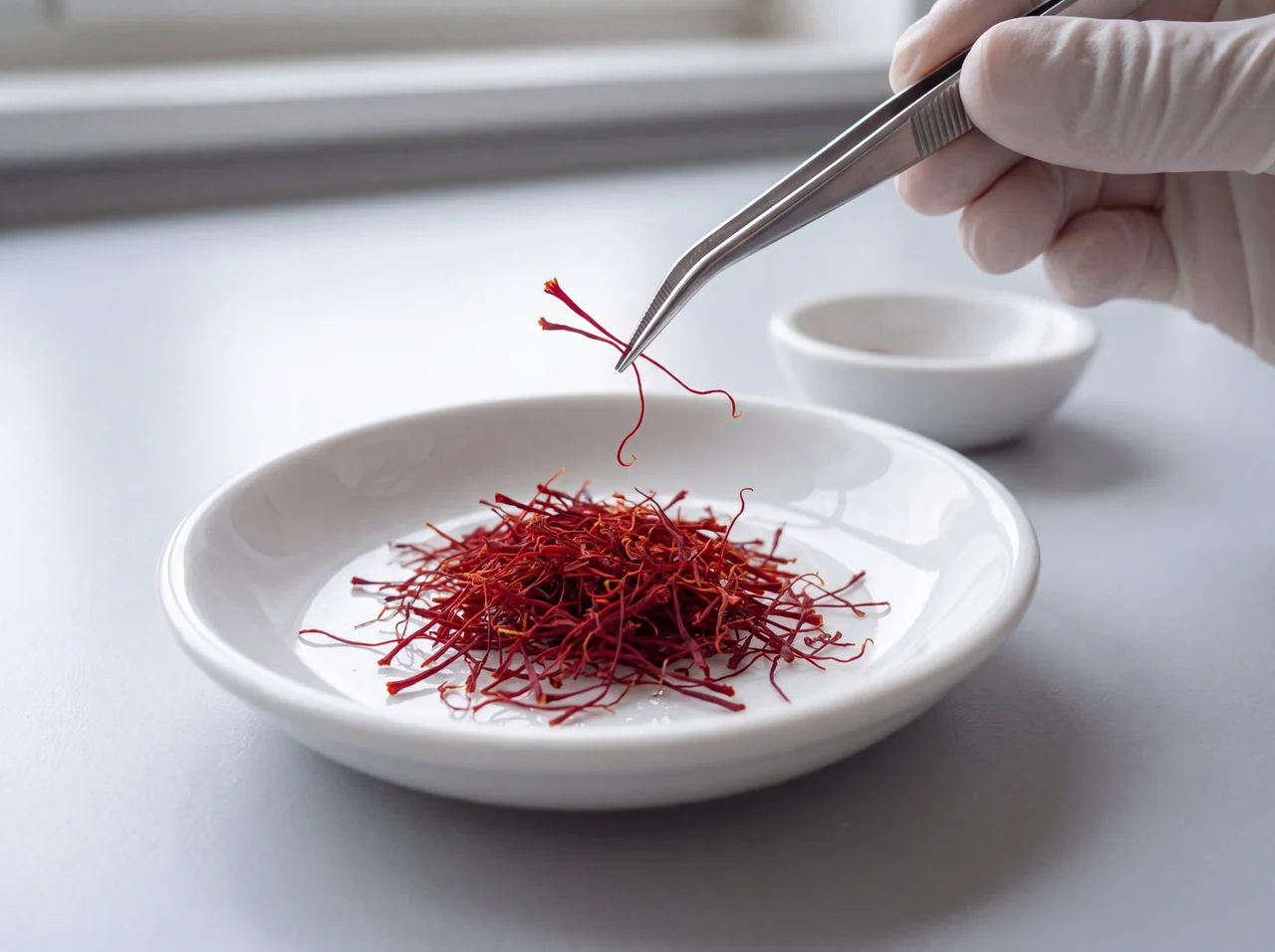
Inspect the supplied material in consistent light and photograph the sample with its reference. Look for differences within the sample, unexpected material, unusual surface appearance and a mismatch with the agreed presentation. Compare it with your retained approved sample if you have one.
These observations help identify questions for the supplier or laboratory. They do not identify every possible added substance, establish geographical origin or provide a complete chemical assessment. Record what you actually see rather than turning an observation into an unsupported diagnosis.
Why a water test is only a screening observation
An infusion can help compare how samples behave under the same conditions. Use equal saffron weights, the same water volume, temperature, vessel and observation time. Photograph the liquid and threads consistently and note aroma separately.
There is no universal home-test shortcut that answers every form of adulteration. The Commission's Joint Research Centre describes several analytical approaches for herbs and spices, including genomic methods, spectroscopy and marker-substance detection. The appropriate method depends on the suspected issue. JRC: methods for detecting adulteration.
Avoid accepting or rejecting a commercial lot solely because an online video says genuine saffron must change colour within an exact number of seconds. Your supplier's specification and a suitable laboratory assessment provide a stronger purchasing record.
Match the laboratory work to the concern
| Question | Information to give the laboratory |
|---|---|
| Does the material meet a saffron quality specification? | Product form, required standard, parameters and limits |
| Is another botanical material present? | The product description and any observed inconsistency |
| Is an added colour suspected? | The observation, sample history and requested investigation |
| Does a document belong to this shipment? | Lot identifiers, sample chain and report reference |
Ask the laboratory to propose an appropriate scope and explain what its result can establish. Keep the resulting report with the sample record. See the certificate-of-analysis checklist for the fields to review.
Build authenticity into supplier approval
Request a clear product description, sample and lot references, relevant reports and an explanation of how the shipment will be identified. Confirm the commercial counterparty and its contact details. When the supplied material changes, review whether the existing approval still applies.
On arrival, check labels and seals before opening the stock for use. Compare the lot references with the order file and follow your receiving procedure for any mismatch. Keeping these steps routine makes them easier to apply across repeat orders.
Prepare the next order around evidence
CleanSaffron coordinates saffron samples and independent laboratory testing around the buyer's specification. Include your authenticity questions in the initial enquiry, together with grade, quantity and destination, so the necessary work can be planned before shipment.