
Overview
A private-label saffron range starts with a defined customer and a repeatable ingredient specification. Choose the presentation, pack weight and quality requirements together, then work out how the bulk saffron will become a finished retail product.
CleanSaffron supplies whole-thread saffron in bulk for brands and distributors, with sample, testing and packing requirements agreed around the order. Retail filling, artwork and finished-pack arrangements should be defined explicitly in the buying brief and with your chosen packing operation.
Define the range before choosing the grade
Decide where the product will be sold and what the customer expects to see. A gift range, a grocery shelf and a specialist food-service line can require different presentations, price points and pack formats. Write those requirements down before asking suppliers to quote.
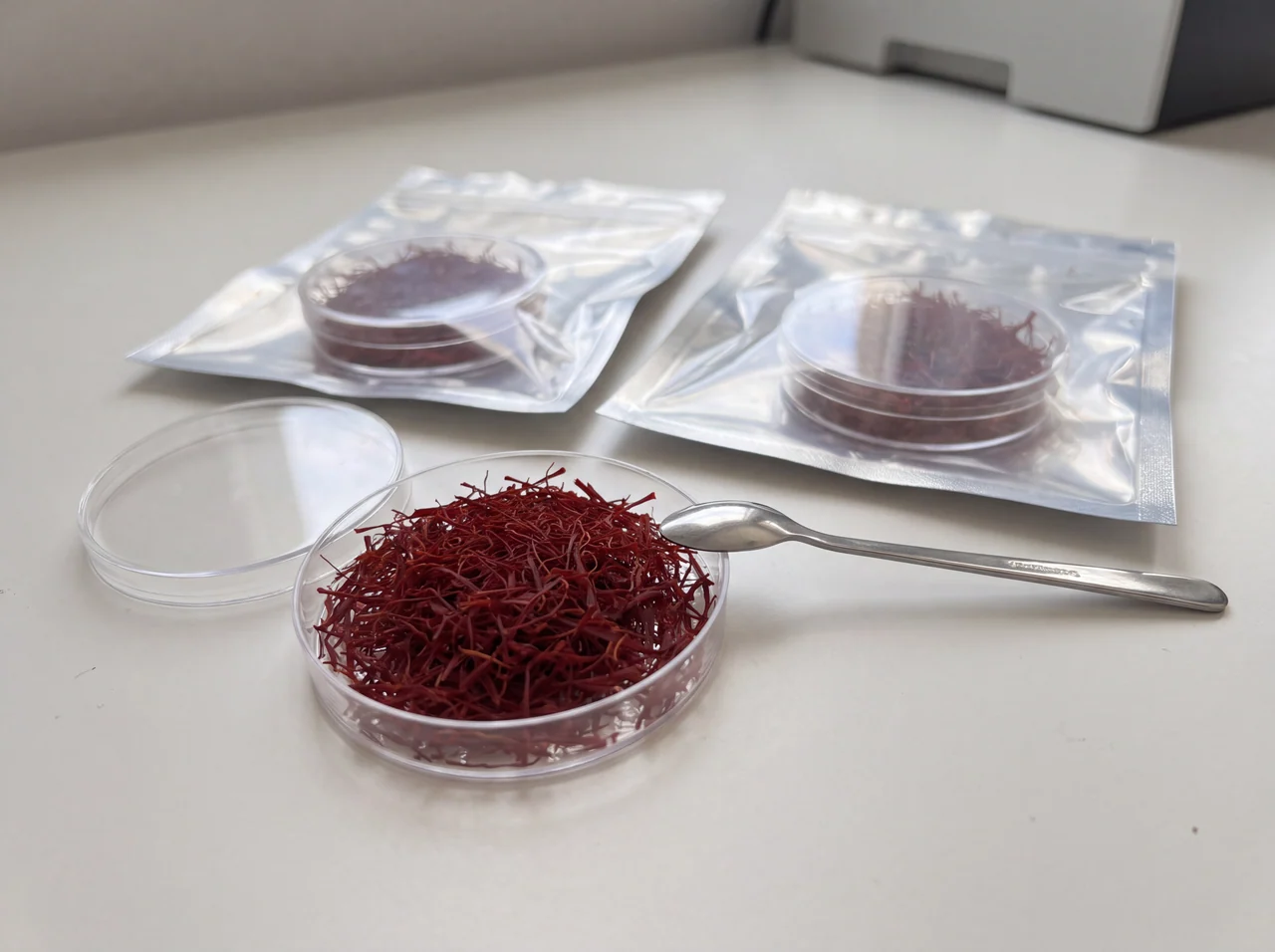
Compare samples at the intended retail fill weight. Assess the appearance through the proposed container and the practical handling during filling. Our Super Negin and Negin comparison gives a method for linking the grade choice to the product your customer will receive.
Build the unit economics from grams upward
Calculate the theoretical pack count from the usable saffron weight and target fill weight. Then account for actual filling yield, quality samples, containers, closures, labels, labour and distribution. Include the minimum order quantities of packaging components as well as the saffron order.
For a hypothetical example, 10 kg equals 10,000 g and could theoretically fill 10,000 packs of 1 g before any sampling, handling loss or permitted filling variation. That is a planning calculation, not a production-yield promise. Measure your own packing run before committing to retail volumes.
Agree the ingredient and packaging specifications
| Specification area | Decision to record |
|---|---|
| Ingredient | Grade, form, harvest preference and lot approval |
| Quality | Required analyses, criteria and report review |
| Container | Material, closure, dimensions and suitability |
| Filling | Target quantity, equipment and checking procedure |
| Identification | Lot coding and link to the incoming bulk stock |
| Release | Who approves the finished product and records the decision |
Keep the specifications connected. If the container changes, repeat the relevant handling and presentation checks. If the saffron lot changes, apply the agreed ingredient approval process before treating it as equivalent.
Prepare labels for the intended market
Identify the destination before finalising artwork. The required information depends on the market, product and pack. As one example, UK guidance covers food name, net quantity, date and lot information, storage conditions and the relevant food-business name and address. Review the current rules for your actual sale. GOV.UK: food labelling.
Use claims that the product file supports. If your range needs a particular origin, certification or other declared attribute, establish the evidence and approval process before printing it on thousands of labels. Keep the approved artwork version with the production record.
Preserve traceability through repacking
Assign a finished-product lot that can be traced to the incoming saffron and the packing run. Record the quantities received, used and remaining, along with relevant samples. If more than one incoming lot is used, retain the relationship to each.
The European Commission's traceability guidance explains the importance of following food through production and distribution. A practical repacking record makes that relationship usable within your own business. European Commission: traceability.
Plan replenishment before the launch
Estimate the time needed for lot selection, samples, analysis, packaging supply, filling and delivery. Keep an approved specification that a new purchasing team can understand. Decide when a new lot requires a fresh visual or recipe assessment and who can approve it.
Start your CleanSaffron wholesale enquiry with the target market, planned pack weight, expected volume, grade preference and destination. Add your report and bulk-packing requirements so the ingredient supply supports the brand you are building.